
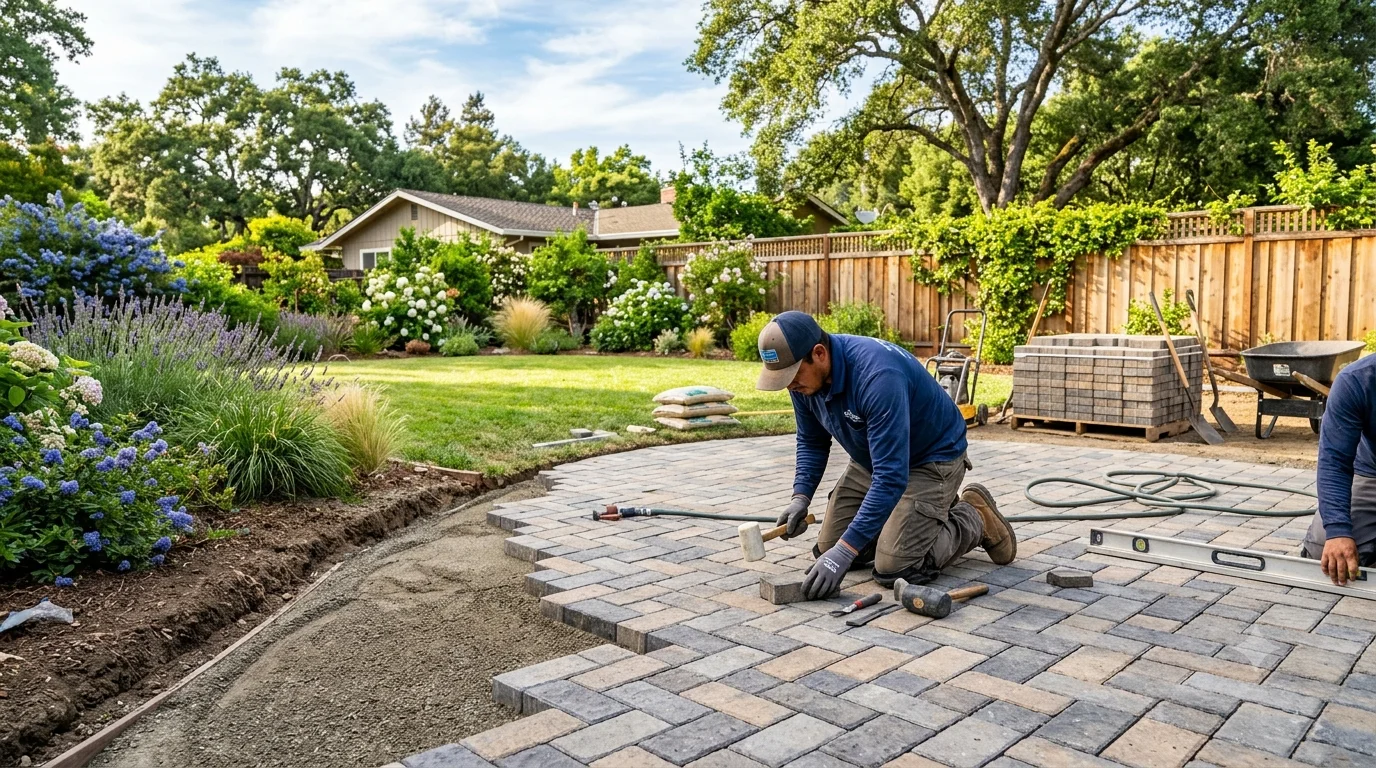
Pavers can transform a backyard, and our team at Oscar Landscaping sees timing make or break a project. The best time to install pavers in Northern California usually falls during the dry season, spring through fall. This guide walks through why timing affects how your new patio or driveway holds up for years to come.
Understanding Northern California’s Seasons
Northern California runs on a Mediterranean climate, with wet winters and dry summers. Most of our rain falls between November and March, with December and January usually the wettest. From April through October, the region stays mostly dry, sometimes going months without real rainfall. That dry stretch gives contractors a wide window to work with stable, workable soil. That’s usually when homeowners find the best time to install pavers without fighting the weather. Coastal spots near the bay stay cooler and foggier than inland valleys during summer months. Knowing this pattern is the first step toward picking the right week for your project. You can read more about our approach on our about page.
Best Time to Install Pavers by Season
The best time to install pavers here is spring or fall, when temperatures sit in a comfortable range. Spring installations, done between March and May, benefit from soil that’s settled after winter rain. Fall installs, roughly September through November, take advantage of dry ground before the rain returns. Summer works too, though inland areas can get hot enough to slow down curing and crew comfort. Winter is the trickiest season, since saturated soil makes proper base compaction nearly impossible. We generally tell clients the best time to install pavers is whichever dry window fits their schedule best.
When to Install Pavers in California for Best Results
When to install pavers in California really comes down to soil moisture more than the calendar date. Figuring out the best time to install pavers on a specific lot means checking the ground itself. A base that’s too wet won’t compact evenly, and that leads to uneven pavers later on. A base that’s bone dry can also crumble instead of locking together the way it should. We check soil conditions on site before locking in a start date for any paver job. Booking early in the season also means better access to your preferred paver style and color. Waiting until late fall can mean a rushed job squeezed in before the first storm arrives. Homeowners who plan ahead usually get a smoother build with fewer surprises along the way. A short conversation with our crew early on can save weeks of waiting later.
Why the Rainy Season Causes Paver Problems
Installing pavers during a wet Northern California winter creates problems that show up months later. Saturated base material shifts under the weight of the pavers, leading to dips and uneven spots. Joint sand washes out faster in wet conditions, leaving gaps that invite weeds and ants. Standing water on a half finished job site can delay work for days at a time. Crews also struggle to grade and compact properly once mud gets involved. None of this means winter work is impossible, but it does raise the risk and the cost. That’s part of why the best time to install pavers rarely falls in the middle of winter. Homeowners who wait until spring often avoid these headaches altogether and get a cleaner finished product. A dry base simply gives the whole system a better chance to settle correctly.
Backyard Drainage Solutions to Plan Before You Pave
Backyard drainage solutions matter as much as timing when you’re planning a paver project. Getting water flow right before the pavers go down saves you from costly fixes later. Here are a few backyard drainage solutions we build into most paver projects:
- Sloped grading that moves water away from the house and toward a safe outlet
- Channel drains set into the paver surface at low points
- A permeable paver base that lets water soak through instead of pooling
- French drains along fence lines or low corners of the yard
- Downspout extensions that carry roof water past the new patio area
Any of these backyard drainage solutions can pair with a paver project without adding much extra time. We plan drainage into the design before construction starts, not as an afterthought later on. A little planning here saves homeowners from costly repairs down the road.
How Weather Affects Paver Base and Joint Sand
Temperature and moisture both play a role in how well your paver base sets up. Base material compacts best when it holds a little moisture, not when it’s soaked or bone dry. Polymeric joint sand needs dry conditions to cure properly once it’s swept into the joints. Rain within the first day or two after sanding can wash the product out before it sets. Extreme heat can also cause sand to cure too fast, which weakens its grip over time. This is part of why the best time to install pavers lines up with mild, stable weather.
Scheduling Your Project with a Local Contractor
Good paver crews book up fast during the busiest stretches of spring and fall. Reaching out a few months ahead gives you more say over your start date and material choice. We can walk you through our full hardscape and landscaping services before you commit to a start date. Off season booking, like late winter, can sometimes get you a faster start and better pricing. A local crew also knows which pockets of the Bay Area drain slower or dry out faster. Booking during the best time to install pavers also means fewer scheduling conflicts with other backyard work.
Best Time to Install Pavers for Different Project Types
The best time to install pavers can shift depending on what you’re building. A driveway needs a longer dry stretch, since heavier vehicle traffic demands a fully cured base. A small patio or walkway can handle a shorter installation window with less risk. Pool decking often gets scheduled for spring, so the space is ready before swim season starts. We’ve handled the best time to install pavers question for patios and driveways alike. You can see examples of finished projects in our project gallery, sorted by season and style. Past clients talk about their own timing experience in our testimonials, which can help you plan.
FAQs
When Does the Rainy Season Start in Northern California?
Northern California’s rainy season typically starts in October or November and runs through March. December and January usually bring the heaviest rain of the year. Exact timing shifts a bit from year to year, so we watch the forecast closely.
Can Pavers Be Installed in the Summer Heat?
Yes, summer works fine for most coastal and Bay Area sites, since temperatures stay mild near the water. Inland valleys get hotter, so we adjust work hours to avoid the worst of the afternoon heat. Materials still cure well as long as the crew manages the timing.
How Long Does a Paver Installation Take?
A small patio or walkway usually takes three to five days from start to finish. Larger driveways or pool decks can take one to two weeks depending on size. Weather delays are more common in the shoulder months around the rainy season.
What Happens if It Rains During Installation?
Timeframes vary by department workload, project complexity, and how complete the submitted plans are. Simple cases might move through review quickly, while more complex walls with engineering can take longer. Starting the permit process early helps keep the overall project on schedule.
Is Spring or Fall Better for a Paver Project?
Both seasons work well, and the better choice often depends on your specific goals. Spring gets your new space ready for a full summer of use right away. Fall offers quieter scheduling and often shorter wait times for materials and crews.
Do I Need Drainage Work Before Installing Pavers?
Most yards benefit from some grading or drainage work before pavers go down. Skipping this step can lead to pooling water or a shifting base within a year or two. We always assess drainage needs during our first walkthrough of the property.
Ready to Pick Your Paver Install Date?
The right season makes a real difference in how your new pavers perform for years to come. Reach out through our contact page and we’ll help you find your best time to install pavers.