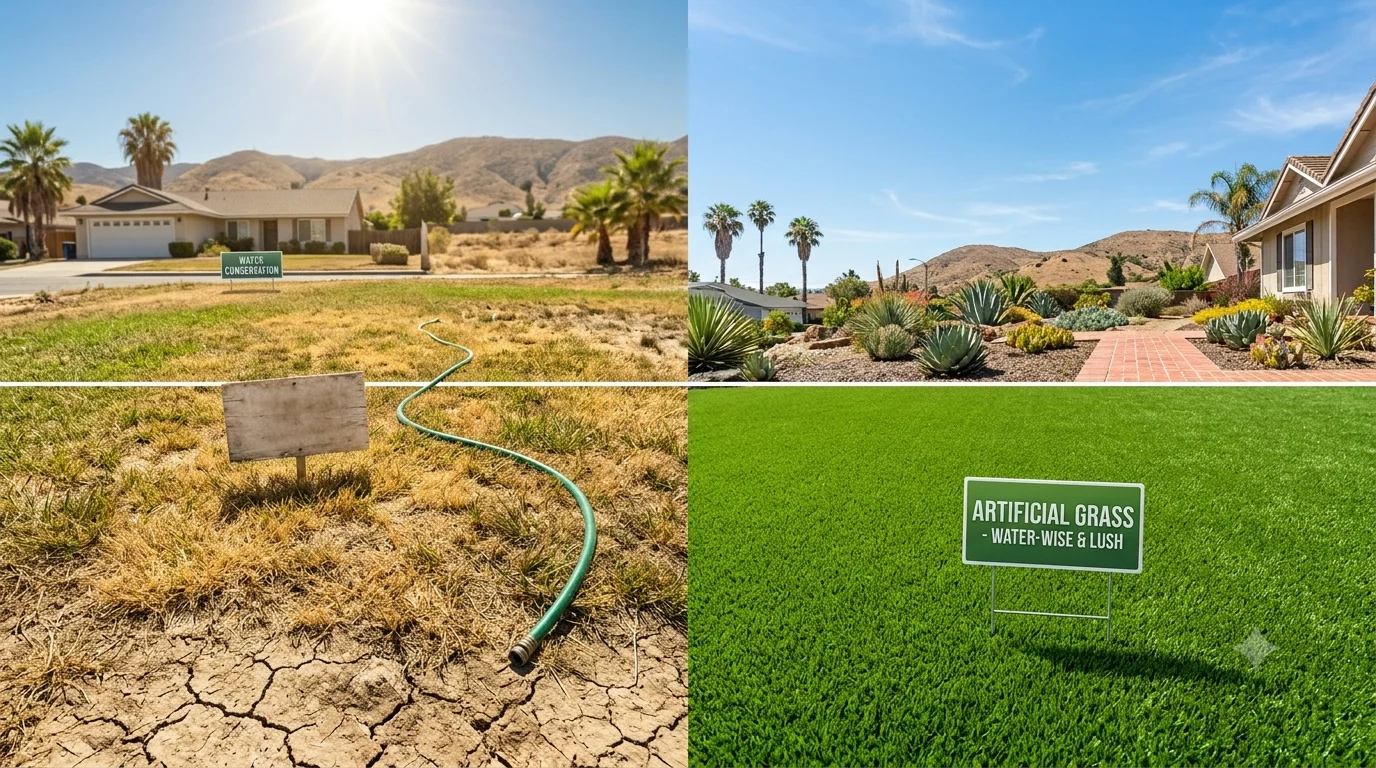
If you live in California, you already know water is not something to take for granted. At the same time, most of us still want a yard that feels green, inviting, and comfortable to spend time in. That tension leads straight into the conversation about artificial grass vs real grass and which one makes more sense for your home. In this guide, we will walk through costs, maintenance, and water savings in real life so you can decide what kind of lawn fits your lifestyle, not only the ideal picture in your head.
Artificial Grass Vs Real Grass Daily Experience
When we talk about artificial grass vs real grass with homeowners, we start with how the yard feels day to day. Real grass has that familiar smell after mowing, that soft give under bare feet, and the way seasons subtly change its color and growth. It is alive, and there is something satisfying about a healthy lawn responding to care.
Artificial turf, on the other hand, stays green regardless of rain, heat, or cold. There is no mud on shoes after a wet day, no patchy spots in shade, and no dry straw areas during a drought. Kids and pets can run on it without wearing it down the way they would a natural lawn. Many people love that consistency, especially in high‑traffic yards or small spaces where grass refuses to look good for long.
There are tradeoffs, of course. Turf can get warmer under direct sun, and while modern products feel better than older versions, some folks still prefer the exact texture of real blades. Real grass can be wonderful to walk on, but it also brings weeds, bald patches, and all the chores that go along with keeping it healthy.
Artificial Turf Cost In California
Artificial turf cost in California can feel like a big leap at first because the upfront investment is higher than simply reseeding or sodding a natural lawn. The project usually includes removing old grass, grading, compacting base, installing drainage, and then laying and securing the turf itself. Good turf materials and proper installation are not cheap, yet they are critical if you want the yard to look and perform well for years.
When we price turf, we look at square footage, access for equipment, base work, and the quality level of the product. There are bargain options that may fade or flatten quickly, and there are higher‑end products with better color variations, backing, and blade shapes that hold up longer and look more natural. Artificial turf cost California homeowners see in quotes will reflect those differences. We prefer to explain the range clearly so you understand why one product costs more than another instead of feeling like the numbers are random.
Turf Vs Lawn Water Savings
One of the strongest arguments for artificial grass vs real grass in California is water. A natural lawn demands regular irrigation, especially in summer. Even efficient systems use a surprising amount of water to keep grass genuinely green, and those gallons show up on your bill.
Turf does not need irrigation to stay green. You might rinse it now and then to clear dust or pet mess, but you are not running sprinklers week in and week out. Turf vs lawn water savings can be huge over time, especially for larger front yards or side yards that are mostly there for appearance rather than everyday use. Many homeowners find that swapping lawn for turf, or even mixing turf with planting beds, drastically cuts their outdoor water use without turning the yard into a barren landscape.
We often talk about water with clients in very practical terms: how much relief they want on their bills, how restrictive local watering rules are, and how much time they want to spend adjusting irrigation schedules every season. Turf gives a different kind of peace of mind in drought years, while real grass keeps you in the familiar rhythm of managing a living carpet.
Maintenance And Long-Term Care
Maintenance is another big fork in the road with artificial grass vs real grass. Real grass needs mowing, edging, fertilizing, and periodic aeration. You may fight weeds, deal with fungus in wet seasons, or patch bare spots where kids play soccer every weekend. If you enjoy yard work or find it relaxing, this can be satisfying. If you are already juggling a busy schedule, it can be one more thing you wish you did not have to think about.
Artificial turf sidesteps most of that. There is no mowing, no fertilizer, and no seasonal scalpings. You will still want to brush it occasionally to keep fibers standing nicely, remove debris, and deal with pet cleanup, but the time commitment is far lower. A well‑installed turf area can look basically “photo ready” with very little effort, which is why many families, especially those with young kids or multiple pets, find it appealing.
We never pretend that turf is completely maintenance‑free, yet it absolutely changes the workload compared to natural lawns. When we talk through options, we always ask how much hands‑on yard care someone wants to be doing five years from now. Their honest answer often points strongly in one direction.
Comfort, Heat, And Everyday Use
Comfort is personal, yet it is worth talking about. Real grass usually feels cooler underfoot on hot days because water in the soil and plant structure moderates temperature. Turf can run warmer, especially in full sun and with darker infill materials. For most yards, this is manageable, yet it is something we encourage clients to experience and plan around. Adding shade trees, umbrellas, or pergolas can help, as can choosing turf products and infills designed to stay cooler.
On the flip side, real grass can become muddy after rain or heavy irrigation. That affects kids, pets, and anyone walking across the yard in regular shoes. Turf does not turn to mud; water runs through the backing and base, and the surface stays consistent. For people who hate dealing with dirty paws, muddy paths, or tracking mess into the house, turf’s predictability is a real draw.
We try to paint an honest picture: turf shines in busy yards and climates where water restrictions are a constant, while real grass shines in cooler spots or homes where the sensory experience of a living lawn matters more than the maintenance.
Environmental Considerations And Personal Values
There is no avoiding the environmental conversation when comparing artificial grass vs real grass. Natural grass is a living plant community, which can support some insects, cool the area, and absorb carbon, but it also consumes a lot of water and often involves fertilizers and herbicides that can affect soil and runoff. Artificial turf saves water and reduces chemical use, yet it is made from synthetic materials and will eventually need replacement.
We find that different homeowners weigh these factors differently. Some are laser‑focused on water conservation and want to cut irrigation to the bone. Others value living plants and prefer to limit plastic where they can. There is no one “right” answer for everyone, which is why we approach each yard as a unique mix of priorities. Sometimes the best solution is a blend: turf where heavy traffic and visual consistency matter most, real planting beds and trees where habitat and seasonal growth feel important.
Our broader philosophy on building outdoor spaces that balance practicality and beauty is part of what we share on the about us page and through the range of projects highlighted on the Oscar Landscaping site.
How We Help Clients Decide Between Turf And Lawn
When someone calls us about artificial grass vs real grass, we rarely give a quick, one‑size answer. Instead, we visit the property, ask how the yard is used, and look at things like shade, slope, existing irrigation, and time constraints. Families with a pack of dogs and a desire for a low‑maintenance yard often lean toward turf after seeing options. Homeowners who love gardening and enjoy a more natural look sometimes prefer to keep or reshape real lawns and pair them with thoughtful planting.
We share real examples from our project gallery, pointing out how turf and natural landscaping can work together. We also explain the financial side of artificial turf cost California residents face, including installation, and we compare that to the ongoing costs of water, fertilizers, and lawn care. Our goal is never to push one solution blindly; it is to help you see what each choice looks like over years, not only the first month after installation.
Turf Vs Lawn Water Savings In Real Yards
To make turf vs lawn water savings more tangible, we often walk through actual zones on a property. A wide front yard that exists mainly for curb appeal might be a strong candidate for turf, cutting irrigation without sacrificing a green feel. A small backyard space used for play and gardening might benefit from a mix of turf play zones and real planting beds.
We also consider local watering restrictions and rebates. In some areas, converting grass to lower‑water alternatives can qualify for programs that help with initial costs. Those details change over time, yet they can make turf or reduced lawn solutions even more attractive. When we build an irrigation plan, we aim to make every drop count, whether it is supporting real grass or keeping trees and shrubs healthy while turf covers the high‑traffic ground.
How Our Experience Shapes Turf And Lawn Projects
We have worked on many lawns, both natural and artificial, across the East Bay. That range of experience is part of why homeowners trust us to talk about artificial grass vs real grass in a grounded way instead of only repeating marketing lines. Some of our favorite projects involve turning patchy, thirsty lawns into clean turf areas framed by thoughtful planting, while others have focused on improving real grass through better soil work and irrigation so it looks and feels more alive.
Clients talk about those experiences in their own words on our testimonials page, and our broader landscape and hardscape capabilities are laid out on the services page. When you work with us, you get a team that sees the whole yard, not only the lawn, and designs accordingly.
FAQs
Is artificial turf more expensive than real grass?
Upfront, yes. Artificial turf cost includes removal of existing lawn, base prep, materials, and installation, which adds up to more than simply reseeding or sodding. Over time, though, reduced water use and lower maintenance can balance some of that initial investment, especially on larger lawns.
Can I mix artificial grass and real grass in the same yard?
Absolutely. Many of the best‑looking yards use a blend of turf in high‑traffic or decorative areas and real planting beds, groundcovers, and trees elsewhere. This combination can preserve a sense of life and seasonality while still cutting down on watering and maintenance.
How do I decide between artificial grass vs real grass for my home?
Start by thinking about how you use your yard, how much time you want to spend on maintenance, how tight water restrictions feel in your area, and what matters most to you visually and environmentally. Talking through those points with a landscape contractor who installs both turf and traditional lawns can make the decision much clearer.
Ready To Reimagine Your Lawn The Smart Way
If you are stuck between artificial grass vs real grass and want a plan that respects both your water bill and your lifestyle, we would be glad to help. We will walk your yard, talk through cost and care, and sketch options that feel realistic instead of overwhelming. Reach out to us through the contact page or call Oscar Landscaping at (925) 396-7871, and let’s figure out the lawn solution that truly fits your California home.