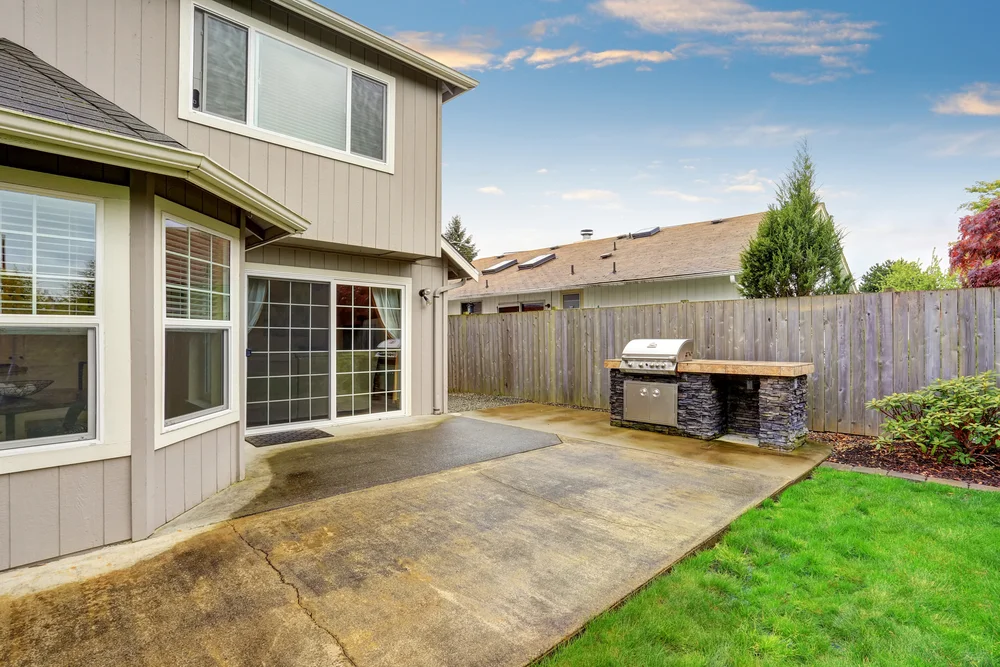
When you picture your future backyard, the patio usually sits at the center of the scene. Friends are gathered around the table, kids are running in and out, and the surface under your feet feels solid and easy to live with. Then the practical question hits: pavers vs concrete patio, which one actually makes sense for your home, your budget, and your long-term sanity. In this guide, we will walk through the tradeoffs so you can feel comfortable with the path you pick.
Pavers Vs Concrete Patio Basics
When homeowners bring up pavers vs concrete patio in the Bay Area, they usually care about three things: how it looks, how long it lasts, and how much strain it puts on the budget. Both materials can create a usable space, but they go about it in very different ways.
Concrete gives you one poured surface, a single sheet that stretches across the whole patio. Pavers, on the other hand, use hundreds or thousands of individual units fitted together over a compacted base. That structure is one of the biggest reasons this paver or concrete conversation keeps coming up. It affects cost, maintenance, repair options, and how the patio handles the ground moving under it over time.
In the Bay Area, where soils can shift and tree roots are not exactly shy, these differences matter more than a little. A patio is not a weekend purchase. It is something you will walk on for many seasons, so it helps to understand what you are really getting.
How Pavers Change The Look And Feel Of A Patio
From a design point of view, pavers bring more flexibility. You can change patterns, combine sizes, use borders, or even create separate “rooms” in the same patio by shifting direction or shape. That variety gives pavers a lot of personality when you are comparing pavers vs concrete patio for a space that will host people often.
Concrete can be colored or textured, but it usually reads as one large surface. For some homes that is fine and even desirable. For others, especially more detailed or traditional houses, the modular look of pavers feels more in tune with the architecture. When we design patios, we think about how the surface ties into the home’s style, the surrounding landscape, and the furniture you love. You can see how this plays out in real projects by browsing the patio and hardscape work in Oscar Landscaping’s project gallery.
If you scroll through enough examples, you start to spot a pattern in what you like. At that point, the pavers vs concrete patio decision becomes less abstract and a lot more grounded in your own taste.
Paver Or Concrete For Long-Term Durability
This is where the paver or concrete conversation gets real. A poured slab is only as strong as the base underneath it and the way it deals with cracks. The ground will move a bit over the years. When it does, concrete usually responds with visible cracks that are difficult to hide. Repairs often mean patching, resurfacing, or replacing larger sections, and even the best fixes rarely disappear completely.
With pavers, the joints between each unit allow the surface to flex a little without tearing itself apart. If a small area settles or a root pushes up, individual pieces can be lifted, the base can be adjusted, and the pavers can be reset. That repair-friendly structure is a big reason many Bay Area homeowners pick pavers vs concrete patio when they think beyond the first couple of seasons.
Of course, pavers still need proper prep. A good base, correct compaction, edge restraints, and attention to drainage matter as much as they do with concrete. But when those steps are handled well, pavers stand up very nicely to kids, dogs, parties, and time.
Concrete Vs Paver Cost At The Start
If you look only at the first estimate, concrete vs paver cost will usually show concrete coming in lower for a basic patio. One pour, fewer components, and less detailed labor often result in a smaller number on paper. For homeowners watching every dollar, that can be very tempting.
Pavers generally cost more upfront. Each stone has to be placed, patterns must be laid out, cuts are made, and more base material is typically required. This extra work is exactly what creates the durability and repair options we talked about earlier, but it also increases the initial bill. The question then becomes how you want to balance short-term savings against long-term satisfaction and maintenance.
When we talk through pavers vs concrete patio with clients, we stay honest about these numbers. There are ways to keep a paver project in line, such as simplifying patterns, dialing in the size, or phasing certain parts of the yard. At the same time, we never pretend pavers are the cheapest option upfront. They are an investment in performance, appearance, and flexibility down the road. If you want to understand where your project might land, our services overview is a good place to see how patios fit into the wider scope of work.
Maintenance Over The Years
Maintenance rarely shows up on the first estimate, but it definitely shows up in real life. Concrete usually starts out fairly low effort. Over time, though, tiny hairline cracks can widen, surface stains can appear, and areas may start to discolor in ways that do not clean up easily. You can pressure wash, reseal, or resurface, but those steps have their limits, especially once cracks deepen.
Pavers ask for a different kind of upkeep. Joint sand may need to be topped up now and then, especially after heavy storms or aggressive cleaning. Weeds are less of a problem with modern polymeric sand, but they can show up along edges if the surrounding planting areas are not maintained. When you stay on top of that, pavers age gracefully. If a particular section gets damaged, you can swap individual units, which makes both maintenance and upgrades easier on the wallet.
When you picture yourself five or ten years from now, it can help to think about which maintenance pattern sounds more manageable. Do you want one surface that might need larger interventions later, or a modular surface that offers smaller, more targeted fixes when needed.
Comfort And Safety For Real-Life Use
People do not hang out in backyards for the material alone. They are out there to relax, eat, talk, and let kids burn off energy. That means comfort and safety play a big role in this pavers vs concrete patio decision.
Pavers typically provide good traction, especially when a textured surface is chosen. That can be important around pools or when sprinklers overshoot a bit. They also break up large expanses visually, which helps guide foot traffic and can even reduce glare in very bright spots. Concrete can be finished with texture as well, but smoother finishes may get slippery when wet and do not always offer the same depth of detail or warmth.
Edges and transitions matter here too. With pavers, it is straightforward to integrate steps, seat walls, or raised planters into the design. These features create safer movement through the yard while making the space feel more finished. Concrete can integrate some of this, but it often requires more formwork and can look heavier when every element is poured as one solid mass.
Design Flexibility For Bay Area Homes
Homes across the Bay Area range from mid‑century ranches to newer builds and everything in between. That variety makes design flexibility a big deal when comparing pavers vs concrete patio. You might want a modern, clean-lined layout at one house and a more classic, warm feeling at another.
Pavers make it easier to adjust style. Simple rectangular patterns can look very modern, while tumbled textures and mixed sizes can lean more traditional. You can echo colors from your roof, trim, or stone accents, which helps the patio feel like it belongs to the house instead of looking like an add-on. With concrete, the main tools are shape, color, saw cuts, and finish, so there is usually less room to play without adding stamped textures or other treatments.
If you are curious how Oscar Landscaping approaches design across different home styles, the about us page and the main site give a good sense of our philosophy and the kinds of spaces we create.
When Concrete Still Makes Sense
Even though we build a lot of paver patios, there are scenarios where concrete remains a reasonable choice. Very large, simple utility areas, tight budgets, or projects where the patio is not the main attraction can all tilt the conversation toward concrete. If you need a straightforward, functional surface in a side yard where looks are less important, concrete can do the job.
In those cases, we still encourage homeowners to think carefully about finish, control joints, base prep, and drainage. Getting those details right can stretch the life of the slab and reduce headaches later. The pavers vs concrete patio discussion does not need to be a fight. It should be about finding the best fit for each part of your property.
How To Decide Which Patio Is Right For You
When you weigh concrete vs paver cost, maintenance, appearance, and long‑term comfort, you end up with a personal equation that is different for every home. If you value design flexibility, easier repairs, and a surface that adapts better to movement, pavers usually come out ahead. If your main goal is a simple, functional pad and budget is the top concern, concrete might be enough.
The nice thing is you do not have to figure this out alone. A good contractor will walk the site, listen to how you want to use the space, and give you honest input on pavers vs concrete patio for your specific yard. At Oscar Landscaping, we build patios, driveways, pool decks, and other hardscape features across the East Bay, and our clients share their experiences on our testimonials page so you can hear directly from homeowners.
Let’s Turn Your Patio Decision Into A Real Backyard
If you are tired of staring at a cracked slab or a patchwork of pavers and grass, this is a good moment to do something about it. The easiest way to get started is to have us walk your yard, talk through how you want to live outside, and compare real options for your budget. Reach out to Oscar Landscaping at (925) 396-7871 or send us a note through the contact page and we will help you turn the pavers vs concrete patio question into a backyard you are excited to use.
FAQs
Is a paver patio always more expensive than concrete?
Pavers usually cost more upfront because they require more labor, more base prep, and individual placement of each unit. That said, they can pay off in easier repairs, better looks, and longer-lasting performance, which changes the picture when you look at the whole lifespan of the patio.
How does concrete vs paver cost change with patio size?
As patios get larger, the price gap between concrete and pavers often grows, since every extra square foot of pavers adds more material and labor. For smaller patios, the difference may feel more manageable, especially if you keep patterns simple and layouts efficient.
Will pavers shift or sink over time?
If pavers are installed over a properly compacted base with good drainage and edge restraints, they stay stable for many years. When you do see settling or movement, the nice part is that specific areas can be lifted, the base corrected, and the stones reset instead of tearing out an entire slab.
Which option handles Bay Area soil movement better?
The modular nature of pavers gives them an advantage in areas with shifting soils or tree roots. Joints allow small movements without cracking the surface, and repairs are more targeted. Concrete slabs can handle some movement but eventually respond with visible cracks that are harder to hide or fix neatly.
Are pavers harder to maintain than concrete?
Pavers need occasional joint sand maintenance and a little attention to weeds along edges, but they respond well to cleaning and spot repairs. Concrete may feel easier at first, yet long-term issues like cracks and surface staining can be more challenging and costly to address.
How do I decide which material is best for my own pool deck?
Start by thinking about how you use the space, how much maintenance you are comfortable with, and what style feels right for your home. Then meet with a contractor who can show you travertine and porcelain samples side by side, explain costs clearly, and help you picture how each option will perform in your specific backyard.
How can I choose between pavers and concrete for my own yard?
Start by deciding how important appearance, flexibility, and long-term durability are for you, then compare that to your budget. Meeting with a contractor who builds patios regularly can help you understand the tradeoffs for your specific site and get a clear, honest look at pavers vs concrete patio for your home.
Ready to start? Reach out to Oscar Landscaping through our contact page or give us a call at (925) 396-7871 today.